If you’ve recently received an autism diagnosis—for yourself or your child—or you’re simply trying to understand it better, one of the first questions that comes up is whether there are actually different types. You might have heard terms like Asperger’s, PDD, or Level 1 and Level 2 thrown around and wondered what they all mean.
The honest answer is that autism classification has changed significantly over the years — and understanding where things stand today makes a real difference in how you approach support and care.
How Autism Is Classified Today
For a long time, autism was broken into distinct, separate diagnoses. Today, the medical community uses the term “autism spectrum disorder — or ASD — as an umbrella that covers the full range of presentations. So when people ask what types of autism are there, the current clinical answer is that they all fall under one diagnosis with varying levels of support needs.
That said, understanding the different forms of autism that were previously recognized — and the different spectrums of autism that still exist within the diagnosis — helps make sense of why two autistic people can look so completely different from one another.
What Were the 5 Different Types of Autism?
Before the DSM-5 updated the classification in 2013, there were five separately recognized categories of autism. These are still widely referenced and many people still identify with these older labels.
1. Classic Autism (Autistic Disorder)
This is what most people picture when they think of autism. It involves significant challenges with communication, social interaction, and repetitive behaviors. It often — though not always — includes intellectual disability and speech delays. This was considered one of the more significant forms of autism in terms of support needs.
2. Asperger’s Syndrome
One of the most widely known autism synonyms, Asperger’s involved average to above-average intelligence and no significant speech delay. People with Asperger’s often struggled with social nuance, sensory sensitivities, and intense focused interests — but were frequently not identified until later in childhood or even adulthood. Many people still use this label to describe themselves even though it’s no longer a separate clinical diagnosis.
3. Pervasive Developmental Disorder — Not Otherwise Specified (PDD-NOS)
This was essentially the catch-all category within the different kinds of autism-spectrum disorder. It applied to people who showed some but not all characteristics of classic autism or Asperger’s. PDD-NOS is one of the different types of ASD that covers a wide range of presentations.
4. Childhood Disintegrative Disorder (CDD)
A rare type where a child grows normally for the first two years. Then, they lose skills in language, social interactions, and other areas. This was one of the less common categories of autism but had a distinct pattern that set it apart.
5. Rett Syndrome
Rett syndrome mainly affects girls. It begins with normal development. Then, purposeful hand skills decline. Head growth slows, and other neurological symptoms appear. It has been reclassified due to its known genetic cause. However, it was once listed with all types of autism in earlier diagnostic frameworks.
What Are the 7 Types of Autism Some People Reference?
You might also come across references to what are the 7 types of autism. This framing isn’t a formal clinical classification but is sometimes used in educational or community contexts to describe different presentations more broadly—including the five above plus distinctions like high-functioning autism and regressive autism. These aren’t official diagnoses but they reflect the real diversity within the spectrum.
Types of Autism in Children—What to Watch For
Types of autism in children can look very different depending on the child.
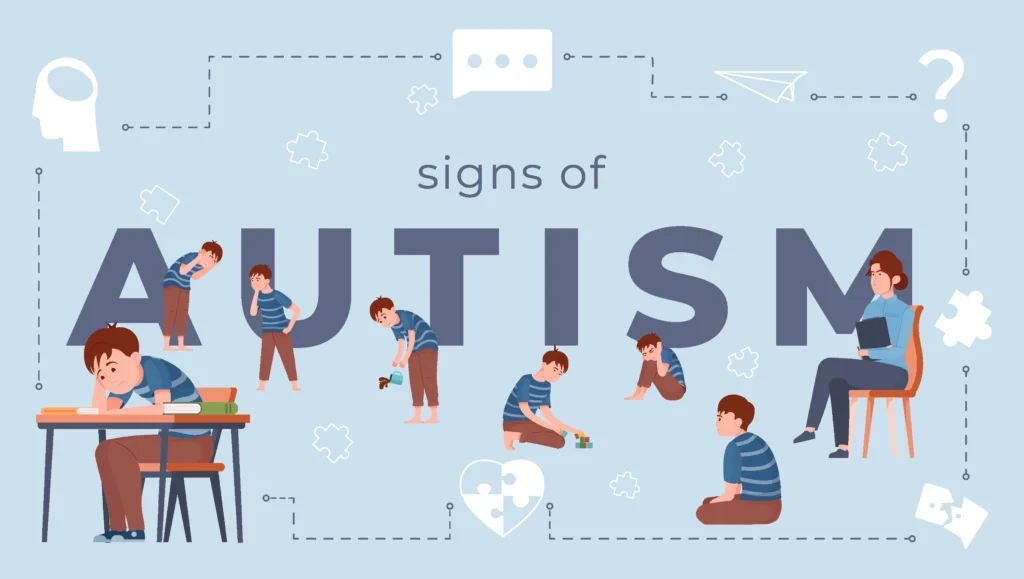
Some children show early signs like:
- Limited eye contact
- Delayed speech
- Repetitive movements
- Difficulty with transitions
Some children develop normally at first. They may start to show differences later, especially when social demands rise around school age.
Common early signs across different kinds of autism include:
- Delayed or absent speech development
- Difficulty understanding social cues
- Repetitive behaviors or rigid routines
- Sensitivity to sounds, textures, or lights
- Intense focus on specific interests
- Difficulty with changes in routine
Every autistic child is different. Two children with the same diagnosis can have entirely different strengths and challenges—which is exactly why the spectrum framing exists.
The Spectrum — What It Actually Means
The word spectrum is important. Different spectrums of autism don’t mean a simple line from mild to severe. It’s a broad range where everyone has a unique mix of strengths, challenges, and support needs.
The current DSM-5 framework uses three levels:
- Level 1 — Requires support
- Level 2 — Requires substantial support
- Level 3 — Requires very substantial support
These 5 types of ASD previously recognized have been folded into this broader framework—though many clinicians and autistic individuals still use the older terminology because it feels more descriptive of their specific experience.
Getting the Right Support
Understanding the different types of autistic presentations is important — but what matters most is getting support that actually fits the individual. A proper evaluation by a qualified professional is the starting point for understanding where someone falls on the spectrum and what kind of care will help most.
At Wevolve Behavioral Health, Dr. Wedline Rho offers caring psychiatric evaluations. She provides personalized treatment for many neurodevelopmental and mental health conditions. Every person deserves support that shows their true self, not just a label. If you’re dealing with an autism diagnosis or worried about a child’s growth, check out our services at wevolvebehavioralhealth.com.
Conclusion
Are there different types of autism? Historically, yes—and understanding those different forms of autism still helps explain why autistic people can look so different from one another. Today they all fall under the autism spectrum disorder umbrella, but the diversity within that spectrum is real, wide, and deeply personal.
Whether you’re newly diagnosed, supporting a child, or simply trying to understand, getting informed is always the right first step. And getting the right support makes all the difference.
FAQs
What are the 5 different types of autism?
Before the DSM-5, there were five types of autism:
- Classic autism
- Asperger’s syndrome
- PDD-NOS
- Childhood disintegrative disorder
- Rett syndrome
Then, the DSM-5 combined them all into one category called autism spectrum disorder.
Is Asperger’s still a diagnosis?
Asperger’s is no longer a separate clinical diagnosis but many people still use the term to describe their experience. It now falls under the ASD umbrella.
What are the different types of ASD support levels?
The current framework uses Level 1, Level 2, and Level 3 — reflecting how much support a person needs in daily life.
What are early signs of autism in children?
Common early signs include:
- Delayed speech
- Difficulty with social cues
- Repetitive behaviors
- Sensory sensitivities
- Resistance to routine changes